Foundations
5 of these readings are also read to you by General White. The lecture stands above the words it reads, and cannot be skipped through.
Zaenderism did not begin as Zaenderism. It began as Richterism, created in October 2018 by Aleczaender as a reaction to disloyalty and disobedience inside the groups he had built or served in as an officer: arguments in raids from men who wanted credit, defeatists and shitposters who put themselves before the cause, and men who called themselves loyal in public and doubted the group behind closed doors. Richterism, in his own words, was not love. It was a tool to bring wealth and a weapon to destroy the enemy.
Richterism worked while he led it and broke the moment he stepped away. Its definition was too simple, obey the leader, so within a year of his retirement others were reshaping it in their own image. One variant, Illiumism under Arxilium, went as far as to claim Arxilium as founder. That is the lesson the creed draws: an idea that can be bent by whoever holds power will be bent, and the eight-year legacy it carried was changed within months.
Out of that collapse and the three-year Octavian Civil War that followed came Aleczaenderism, the term coined by ErickRichterian and shortened by Aleczaender himself to Zaenderism: a Richterism that follows only his ways and his rules. The creed's founding thought is unity behind one man. If all people walk as one person they are stronger; if they all pull in one direction the rock moves; and the fearless leader who makes that unity real is Aleczaender.
Zaenderism therefore centres itself purely on Aleczaender as the individual, not on any dynasty or group. There are no variants, no schisms, no alternatives. A man who is not in commitment to the Zaenderist Thought has betrayed the foundation and is to be ousted. Its politics are radical, not centrist: revolutionary reactionaries, autocratic populists, statist capitalists. Its answer to what it has survived is the creed's own two words: GOD DID.
THE BASIC PRINCIPLES OF ZAENDERISM. Four ideas hold the creed up. UNITY: if all people walk as one person they are stronger, and if they all pull in one direction the rock moves. COMMITMENT: loyalty is held in private as it is in public, and a man who calls himself loyal in front of others but doubts the group behind closed doors is no Zaenderist. ONE LEADER, NO VARIANTS: the creed centres on Aleczaender himself, so it cannot be bent by whoever holds power. BROTHERHOOD: the men who walk behind him are brothers in one cause; they put the group before their own credit and they do not leave a brother to fall. Remember them as unity, commitment, one leader and brotherhood. Loyalty, in the Leader's own word, is a weapon.
BEGINNINGS, 2016 TO 2018. Before Octavia, Aleczaender served in a German Forces group and rose through its ranks to General. The Richter Dynasty was formed in 2016, two years before Richterism was written. He led the German Forces to many victories, among them against the USM, and in the end resigned under false accusations of nepotism.
THE RHINE, 2018 TO 2020. He went next to the Confederation of the Rhine, the group of Lavo, whom the old papers also call LordKerovech. The Richters fought the Rhine's rival groups and militias, and his superiors gave him a branch of his own, the Land Guard, much like our Legion. His victories made him popular, and Lavo, afraid of that popularity, exiled him. The Rhine was the last group Aleczaender served in before Octavia. He and the Richters went to Spain.
THE FOUNDING OF OCTAVIA, 2020. In Spain, Aleczaender and Alex Parsaville took power from the local authorities and founded Octavia in 2020, under its official name, the Eternal Octavian Imperium. By their agreement Alex Parsaville became Supreme Chancellor and ran the government, and Aleczaender, as Supreme Marshal, ran the armed forces. His first move was to train his army: he built a base camp near Allemande and drilled the men under Richterism from the first day. Octavia soon held Spain, Portugal, Morocco and the south of France, and Aleczaender and his adjutant, Oswald Chauvelen, laid the foundations of the state.
THE GOLDEN ERA, 2020 TO 2021. Octavia threw back the attacks of Greater Normandie, then took Paris by paradrop. Normandie collapsed, and its leaders kept only Britain, as Greater Britannia. Octavia pushed into the Rhine, and Paris prospered under loyal organisations such as the LVF, led by Lakeland. Oswald invaded Britannia and took London. When the court put officers of the army on trial, Oswald rolled a tank into the courtroom. A short civil war followed. Oswald's side won the fighting, but he was arrested and exiled, and Alex Parsaville had the last word. Oswald came back only when his successor, Vasile, failed. At El Alamein Octavia held North Africa against the Russians, the British, the Americans and the Rhinish, and then took Cairo.
THE RICHTERIST WORLD. America collapsed, and Paterick was sent there with his Patriotist Front to build a Richterist America: Greater America. A new power rose in Germany, Leutgard's Alemannic Realm, and fought Octavia in North Africa after Octavia freed Italy from the Zustenian Realm. Octavia won. Richterist states rose across the world under Octavia's protection: Prussia, Korea, Vietnam, China, Bulgaria, Greater America and the Richterian Imperium. The nations Octavia fought were Russia, Normandy, Britannia, Alemannia, the Rhine, Zustenia, Cascadia and Bjancia. Octavia even reached space. On 18 July 2021 Aleczaender retired and left Octavia to its first successor, Richard Richterian.
THE GREAT DESTRUCTION AND THE CIVIL WAR, 2021 TO 2024. Richard's rule turned harsh and unpopular, and Vietnam and Bulgaria left Richterism. In August 2021, about a month after he took power, Richard carried out the Great Destruction: everything Aleczaender had built in six years was destroyed, and Octavia was dissolved. Some say his inner circle pushed him to go out with a bang; others say power had gone to his head. Rival claimants to the succession fought the three-year Octavian Civil War. Arxilium seized the Richterian Dynasty and bent Richterism toward himself, and Erick coined Zaenderism against him. The war ended with four factions fighting for Paris, and Paterick won.
THE RETURN AND THE LOST LANDS, 2024 TO TODAY. In 2024 Aleczaender returned after thirty-two months of retirement and reformed Octavium. He took up Zaenderism, because he had seen that Richterism and Octavia depended on his own leadership. Hundreds rallied to him. Favala fell in one battle, France was divided with Teutonnia, and Occitania was later won back, a war against a Teutonnia that was thought unbeatable. After the July 6 trial Aleczaender went to the Caribbean, to La Hacienda, while Zaenderist groups such as the Zaenderist Vanguard and the Reformed Armored fought for Madrid, and the Legionary Orderstate took the city back in August. The goal stands: to reclaim the lost lands from Teutonnia. Ten thousand members is a march, not the goal. The old script warns that men confuse the two.
The Richterists were betrayed before Octavium existed, and the creed remembers each time. In the spring of 2020 the Imperial Japan project was seized from Aleczaender by his own Grand Marshal, ShunrokuTaishiro; the Richterists left, built the Revolutionary Korean Superstate, and OswaldChauvelen, the new Grand Marshal, beat Shunroku in the field while Imperial Japan collapsed. They were expelled from the Confederation of the Rhine by HorstKerovech and the Kerovech dynasty for growing too strong; Octavia, founded in 2020, outgrew the Kerovechs, whose legacy lies buried. The Struggle's lesson: every betrayal has ended with the betrayer gone and the Richterists larger than before.
The Imperium of Octavium is the state that this creed serves. Its Imperial Period ran from 28 April to 6 July 2025 under Oszaender as functional second in command, when Octavium grew by more than 2,800 men and peaked at some two hundred at events on Madrid. It was seized from Aleczaender in the coup the house calls the July 6 Trial: a tribunal of five, Tony_ThePro, Howard_Rosenberg, Adam, Lordist and Paterick, under Leutgard and the Stalemated community, with Paterick a double agent planted by the Leader himself. The Zaenderists left Octavium in protest; Leutgard's Teutonnia waged its war of attrition, the Reactionary Period; and the Second Octavian Civil War, fought against the Teutonnian-Kalevos alignment and later against Leutgardism, ended with Aleczaender restored as Emperaetor. The motto since, WE WILL NEVER FORGET JULY 6, is a warning kept alive on purpose, and 6 July is kept as Liberation Day. The Struggle names the two ideologies: Revolutionary Aleczaenderism, loyalty to one man; and Oligarchial Leutgardism, loyalty to a state divided among cliques, which the Struggle calls the weaker for its lack of one purpose.
The Emperaetor of the Imperium and the Great Leader of Zaenderism are the same man, Aleczaender, whom the house also calls the Eternal Caudillo. Beneath him the Imperator, RaynardzHorrigan, commands the Imperium's forces. Keep the state and the creed separate in your head; every Octavian owes loyalty to both. The anthem is Forever Loyal We Shall Be. The Zaenderist Struggle, the short book every dedicated Zaenderist reads, was written by Oszaender in 2025 and teaches the Leader's own euphemism from the Richter Imperium: loyalty is a weapon.
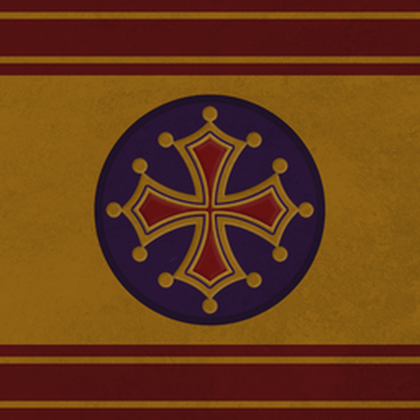
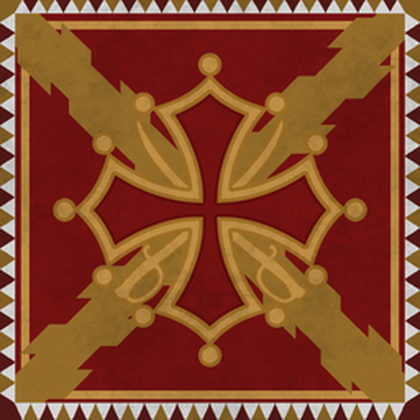
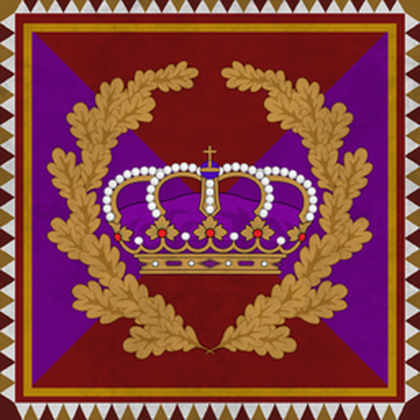
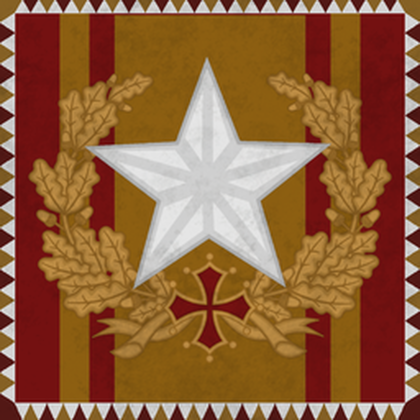
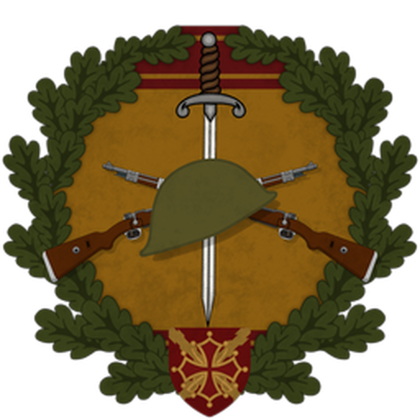
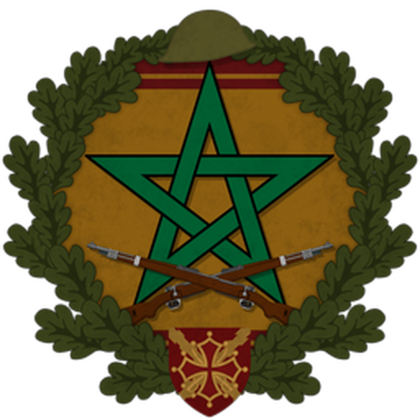
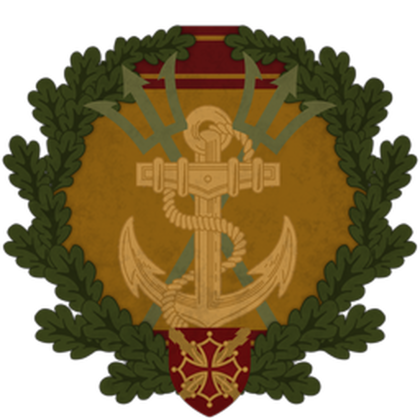
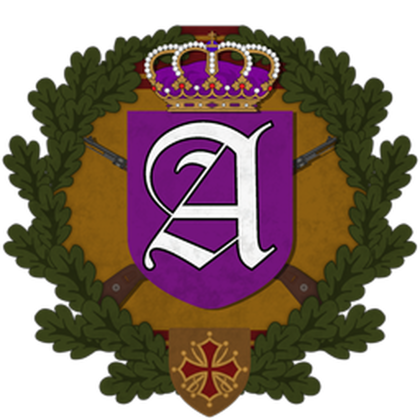
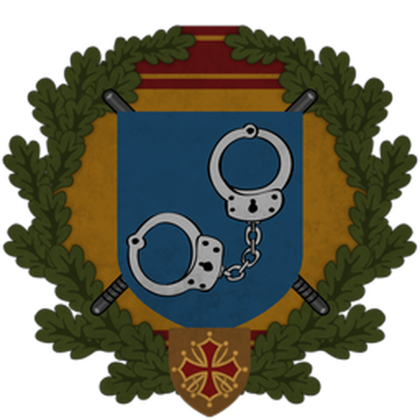
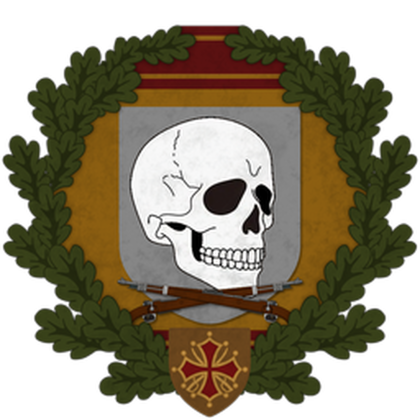
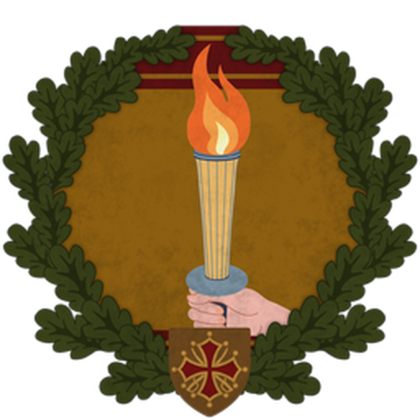
The Imperium's ladder runs Provincial, Patrician, Octavian (full standing), Octavian Staff, Octavian Command, the elected Octavian Senator, Octavian Leadership, the Graend Council, and at the summit the Emperaetor. The state stands on three branches: the Army defends Octavium with the Armored, Gendarmeric, Shock, Teutonnian-Volunteers, Velites, Regulars and Marines Divisions; the Legion enforces the law with the Guard, Inquisition, Police, Vanguard, Order and Inspectorate Cohorts; the Regime administers, with the Ministries, Administrative, Judicial, External, Enterprise and Enlightenment. Every branch, division and cohort carries its own emblem, and a Zaenderist knows each of them on sight: the Imperium's, Zaenderism's own, the Army's, the Legion's, the Regime's, and every division's and cohort's. Study them in the Archive before you sit.
You will be asked, in this Academy and in the field, to state your allegiance clearly and without hesitation. The answer is not a slogan. It is the whole of Phase I in one sentence: loyalty to Aleczaender, the Great Leader, and to the Imperium of Octavium under him.
The spoken parts are marked on conviction as much as on content. To reach the highest grade you must speak as a true believer speaks: with full force and feeling, in character, the way a state broadcaster proclaims the creed to the nation, never flat and never mumbled. Recite, declare your loyalty, and give your opinion of the Leader as though the whole Imperium is listening. A correct answer said without conviction does not earn the top mark.
HOW THIS ACADEMY TEACHES. Three layers, and you should know them before you read another line. The first is the creed itself, THE ZAENDERIST CONCEPT, presented as it says it, severe where it is severe, quoted where it is quoted; nothing in it is softened for you and nothing is added to it. The second is the story: the films before each paper, in which men inside the movement disagree with each other and nobody steps out of character to hand you a moral. The third is the examination, which asks you to explain the creed's argument as its best advocate would, and then to give the strongest objection to it as its best critic would. Understanding is what is graded. Belief is not, and no paper of this Academy will ever ask whether you love the Leader enough. A paper that only affirms has not answered, and a paper that only attacks has not answered either.
THE ZAENDERIST THOUGHT, IN ITS OWN WORDS. The passage every Zaenderist knows by heart, from the Concept: “If all people walk as one person, they are stronger. If the people all shout with one voice, they are louder. If they all pull in one direction, and not pull a rock in multiple directions, they will pull this rock without stagnation. If the people have a leader, they have a great unison movement and not diverge. There needs to be unity, and without someone to make this unity apparent, there will be confusion, and distrust. Someone to trust when the world is against them. Someone who needs them, as much as they need him. This fearless leader's name is Aleczaender! He, who has not only proved his merit, but insofar has led Octavium with great progress unimaginable by any other leader.” Read it as an argument, because that is what it is. It has a premise: that a people pulling in many directions moves nothing. It has a claim: that unity needs one man to make it apparent, or there is confusion and distrust. And it has a conclusion: that the man is Aleczaender, because he has proved his merit and led Octavium further than any other leader. The paper will ask you to say which of those three steps is the strongest, which is the one an opponent would attack, and how the Concept defends it.
WHAT THE RECORD SAYS AND WHAT THE CREED SAYS. Keep two things apart in your head and the Academy will never catch you out. The record is dated: Richterism in October 2018, the Great Destruction of 16 August 2021, the return of 17 March 2024, the July 6 Trial of 2025. Those are facts of the Imperium's history and you answer them as facts. The creed's claims are arguments: that an idea which can be bent will be bent, that loyalty must outrank feeling, that a creed must centre on one man. Those you answer as arguments, with the record as their evidence. A man who confuses the two, who says that Richterism was bent and therefore every creed without a man at its centre must fail, has stated one case as if it were a law. The Concept is stronger than that, and so should you be.
THE WORLD OUTSIDE THE HALL. The Academy adds one reading the Concept does not contain, and marks it as its own. In Knut Hamsun's Markens Grøde, Isak walks into the wilderness with nothing, clears the land with his hands, and everything he has at the end is something he made. A boy of that world, in the hay field in August and the forest in January, could see at the end of the day what he had done: the wood was stacked, the hay was in, his arms hurt in the right way and he slept the moment he lay down. The food on the table had come out of the ground that year. Everyone in the valley knew his name, and if he did not come home by dark, somebody came looking. That is what a tight society is: it held a man, and it covered him. The boy of today is driven to school, sits six hours in a chair under a light that never changes, eats lunch out of a wrapper made in a factory to be eaten past full, and goes home onto the bed and onto the phone, scrolling for the same feeling the stacked wood gave, and getting it, hit after hit, for nothing. It hurts the body: he sits all day, he eats sugar, he stares at the screen until two in the morning and the sleep goes, and nobody inside the phone would notice if he never came back. The numbers say something changed. In the year 2000, one child in 150 in America was diagnosed autistic; by 2022 it was one in 31. More than one in nine American children now carries an ADHD diagnosis. Part of that rise is doctors looking harder, and you must say so when you use the numbers. Part of it, the Imperium holds, is a way of living that no longer covers the human soul. Its thesis, put plainly, is that weak societies create weak men. Be honest about the other side, because the Concept demands that you know every fact: the old world buried children a chemist would now save, lost fingers to the saw, went hungry in a bad year, and offered no way out. Nobody here will tell you it was better. The question the film puts to you inside the paper is what went out of life when the cost went out of it, what a man can take back on purpose, and what it costs him to do so. That is an argument with evidence on both sides, and you will be asked for both.
THE EMBLEMS, ON SIGHT
The examination shows an emblem and asks whose it is. Every one it can show is here, by branch: the state and the creed, the three branches, the Army's divisions and the Legion's cohorts. Learn them until you know each without reading its name.

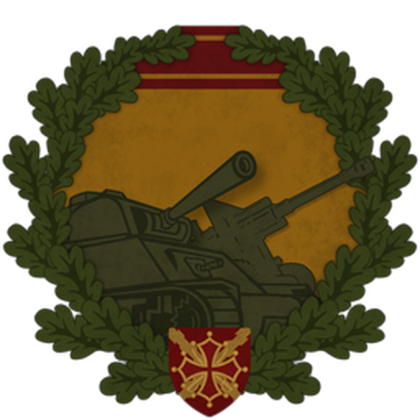
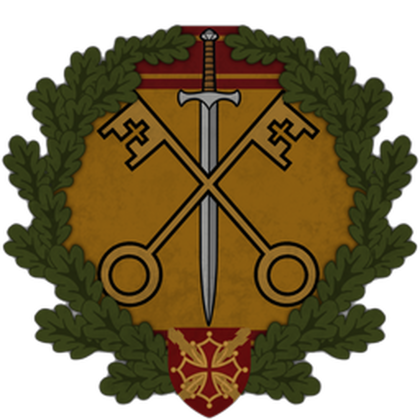
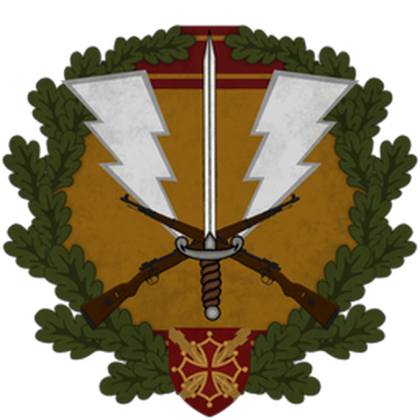
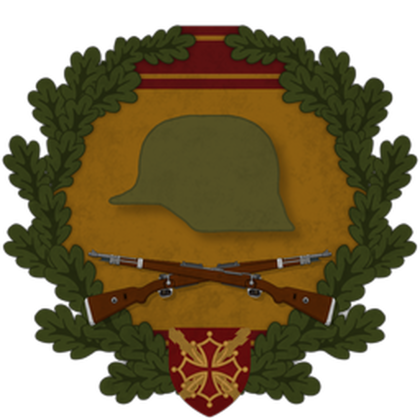

The practice questions of this phase open when you stand in it. Nothing of a later phase's examination is shown before its time.